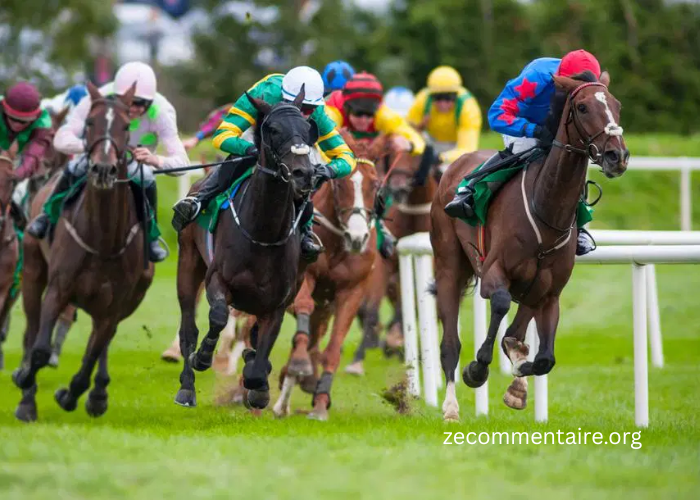
Many bettors glance at the turf form and guess. Professionals treat it like data. Turf form shows a horse’s results on grass surfaces. If you want to bet smart, you need to know what those numbers and symbols mean.
One easy way to place your bets from anywhere is with the Betway app on your phone. Many turf races are available to bet on once you set up your account. Betway offers live turf betting options in many markets, though you should check what’s available at your location once you install the app.
What Turf Form Is
Turf form is basically the record of how a horse has run in past races. You can see finishing places and sometimes letters that show what happened. The figures are shown from oldest to newest, so the most recent race is at the right.
Getting turf form right helps you recognize the patterns.
Start with the race details
Before anything, you need to know what today’s race actually asks from the horse.
Start with the basics on the card or form guide: distance, surface, race type, and class level. A horse dropping in class find the race easier, while one moving higher will need to beat better horses. . Age limits and race restrictions also matter, because they shape the field before the race even starts.
If the basic race conditions are wrong for the horse (too far, wrong surface) most pros move on quickly.
Decode the form figures and symbols
Now to the line everyone stares at first: the finishing positions.
Form figures usually run from oldest to newest, with the most recent race on the right. Numbers 1 to 9 show where the horse finished, while 0 usually means the horse was outside the top places. Symbols like “-” or “/” mark breaks between seasons.
Common letters and what they mean on turf cards:
- F – Means the horse fell..
- PU – means the horse was pulled up and didn’t finish.
- S – Could mean a slip or a similar issue.
- UR – Unseated rider.
- D – Has won over this distance.
- C – Has won at this course.
- CD – Has won over this course and distance.
These codes tell you important things not obvious from the number alone.
What pros actually look for
Professionals rarely care about one figure on its own. They check patterns over several runs:
- Steady placings: A horse that keeps finishing second or third at this level may be close to winning when conditions line up.
- A step forward: A sharp improvement can be important, especially if it came after a change in trip, tactics, or conditions.
- Excuses: A bad figure after a long break, a poor draw, or a big class rise is not always a red flag if there is a clear reason in the comments.
A line like 7650 can hide a horse that was only beaten small margins in big fields, so always match the numbers with the race comments where possible.
Track and distance strengths are clues. Some horses only do well at certain distances or tracks. A horse with strong turf results at today’s distance has a better chance than one that hasn’t run that distance before.
You might also see speed figures in some form guides. These are numbers meant to show how fast a horse ran relative to others. They are helpful but not perfect, especially on turf, because grass races can unfold slowly at first and speed isn’t always obvious from the final time.
Match turf form to going, trip and draw
Track conditions matter. You can’t read turf form like dirt form and expect good results.
On turf, check these pieces first:
- Going: Look at how the horse performed on firm, soft or heavy ground. Some horses find extra speed on firm turf, others need cut in the ground.
- Distance: “D” next to the name means the horse has already won over today’s trip, which is a strong positive if the race shape is similar.
- Course: “C” or “CD” mark proven track or course-and-distance winners, which many bettors treat with respect on tricky or tight layouts.
The draw also matters, especially on turning tracks or short home straights. A wide stall in big turf fields can force a horse to cover more ground or sit further back, while an inside gate on a sharp track can help a front‑runner control the race.
Small checklist for every turf race
Before you rate a horse’s last runs, ask:
- Was it on turf or another surface?
- Was the ground similar to today?
- Was the distance within one furlong of today’s trip?
- Was the draw or pace against the horse?
If three or four answers line up well, the old form is usually more reliable.
Read beyond the horse: jockey, trainer and recent pattern
Pros also read the humans and the short‑term pattern around the horse.
Key angles:
- Trainer form: A trainer with recent winners can be a positive sign. If the yard is quiet, even a well-rated horse may not perform at its level.
- Jockey bookings: Bettors often notice when a leading jockey takes the ride, returns to a familiar horse, or replaces a less experienced rider.
- Recent workload: The gap between races matters. Back‑to‑back runs in a short period might show a horse thriving on racing, or it could hint at fatigue if the last run was flat.
And that’s why it matters to look at the full line, not just the finishing spot. A horse finishing 4th, beaten one length in a higher class with a weaker jockey, can be a stronger bet today than a last‑time‑out winner going up in grade with a big weight rise.
Put it all together like a pro
So here’s what might work for you. For each turf race, pick two or three horses and run a quick, repeatable checklist:
- Race conditions: Right distance, turf, and class?
- Form line: Consistent figures and clear reasons for any poor runs?
- Ground and trip: Proven on today’s going and close to today’s distance?
- Track and draw: Any “C” or “CD”, and a sensible stall for the running style?
- People and pattern: Stable form, jockey booking, and a logical recent schedule?
Reading turf form takes time, but it’s not impossible. Start with the basics: understand the numbers, check surface records, and see how recent performances stack up. Watch how horses do in different conditions and against different competition.
Make decisions based on patterns, not guesses.